



Molte aziende in Australia vedono ancora la conformità come un costo piuttosto che una funzione che può aumentare la produttività. Approcci obsoleti alla conformità, che si basano su processi manuali, rafforzano questa visione.
In Australia, molti membri del team responsabili della gestione della conformità si sentono spesso sopraffatti mentre cercano di destreggiarsi tra molteplici attività impegnandosi al contempo a mantieni la responsabilità. Le organizzazioni che gestiscono la conformità prevalentemente in modo manuale, o che utilizzano più sistemi software a tale scopo, affrontano sfide di efficienza molto reali.
La realtà è che la gestione della conformità manuale e non integrata riduce significativamente l'efficienza, impegnando risorse umane scarse in attività non produttive. Per illustrare questo concetto, abbiamo creato un esempio semplice ma pratico per evidenziare l'impatto delle operazioni manuali sulla gestione della conformità.
In che modo i processi di conformità manuali riducono l'efficienza: un esperimento mentale
L'esperienza e i riscontri dei clienti dimostrano che nelle organizzazioni che gestiscono la GRC manualmente, i dipendenti trascorrono in media circa un terzo del proprio tempo in attività che possono essere automatizzate (molte delle quali facilmente), come il monitoraggio delle azioni, il completamento di liste di controllo incomplete, l'invio di promemoria e la generazione di report.
Analizziamo cosa potrebbe significare tutto ciò per un’azienda. Per semplificare, useremo una stima arrotondata pari a 30%.
Sentiti libero di modificare questa cifra in base a ciò che ritieni accurato per il tuo team: in entrambi i casi, i risultati sono destinati a sorprenderti!
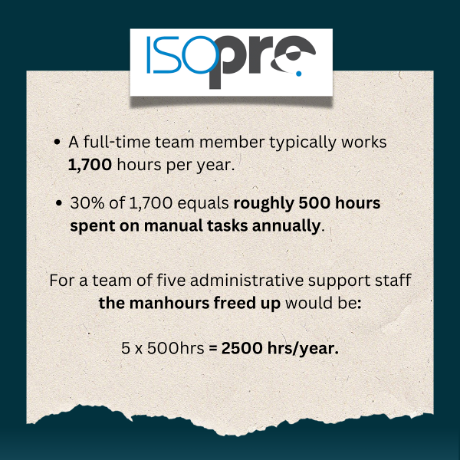
- Un membro del team a tempo pieno lavora tipicamente 1.700 ore all'anno.
- 30% su 1.700 uguale 500 ore spesi annualmente in attività manuali.
- Per un team di cinque dipendenti, le ore-uomo liberate sarebbero 5 x 500 = 2500 ore all'anno.
In che modo un software GRC integrato riduce il carico delle operazioni manuali sulla gestione della conformità
Un software di conformità integrato vi consente di ridurre significativamente le attività manuali e di risparmiare centinaia di ore uomo grazie a:
Raccogliere informazioni sul luogo di lavoro
I dispositivi mobili si sono ridotti notevolmente di costo e non sono più l'hardware “wow” che erano un tempo. Distribuire un dispositivo di acquisizione dati sul luogo di lavoro distribuisce lo sforzo di raccolta dei dati, lo accelera massicciamente e garantisce che nulla venga “perso nella traduzione”. Moduli intelligenti con controlli obbligatori e logica di flusso di lavoro assicurano che tutte le informazioni richieste vengano raccolte senza errori. Una soluzione intelligente può anche ricordare ai membri del team che le informazioni devono essere fornite, aggiornate o completate.
Raccolta e distribuzione automatizzate delle informazioni
Un software di conformità integrato consente di raccogliere, organizzare e archiviare automaticamente i dati all'interno di un sistema centralizzato, eliminando la necessità di fogli di calcolo sparsi o strumenti di acquisizione dati non integrati. Ciò garantisce che tutti gli stakeholder pertinenti abbiano accesso alle loro informazioni critiche in tempo reale.
Monitoraggio dell'efficacia
Il monitoraggio delle azioni o dei problemi che emergono dai controlli di conformità può richiedere un grande sforzo manuale. È necessario inviare promemoria, raccogliere le informazioni mancanti e inserirle nei set di dati originariamente compilati. Il monitoraggio automatizzato tramite promemoria di sistema ed escalation libera tempo ed elimina le frustrazioni, consentendo a te e al tuo team di concentrarvi su altre attività. Può inoltre rafforzare la responsabilità e la responsabilizzazione al corretto livello operativo, migliorando ulteriormente l'efficacia e riducendo le operazioni manuali nella gestione della conformità.
Eliminazione del reporting manuale
Un software di conformità perfettamente integrato consente di automatizzare la creazione di avvisi e report, facendo risparmiare ore di lavoro. L'automazione della distribuzione dei report, o la possibilità di scaricarli ‘on demand’ da parte degli stakeholder interessati, non solo aumenta l'efficienza e fa risparmiare tempo, ma riduce anche gli errori e i ritardi nella raccolta dei dati e ne migliora la completezza. L'automazione degli avvisi garantisce inoltre che tutti gli stakeholder ricevano le informazioni necessarie, senza “perdite di significato”, in tempo reale.
ISOPro ha già aiutato molti clienti in Australia a semplificare la conformità
Disponiamo di casi di studio e testimonianze che dimostrano come, grazie a ISOPro, le organizzazioni abbiano ridotto le attività amministrative manuali relative alla conformità fino al 40%. Con ISOPro, molti dei nostri clienti hanno:
- Aumentata la capacità operativa automatizzando l'amministrazione intrinseca alle attività di conformità.
- Raggiunta una più rapida risoluzione dei problemi grazie ad avvisi in tempo reale, visibilità sulle attività correlate, accesso su richiesta alle informazioni di altri stakeholder e reportistica strutturata.
- Ridotti i colli di bottiglia della conformità ricordando ed escalando le attività aperte, rendendo le informazioni pertinenti facilmente accessibili, fornendo consigli e strumenti operativi e automatizzando le attività ove possibile.
Cosa potrebbe ottenere la tua azienda con una maggiore capacità del team (30%), senza assumere personale aggiuntivo?
Discutiamo di come ISOPro può aiutarti a fare di più nello stesso numero di ore. Contattaci oggi stesso!